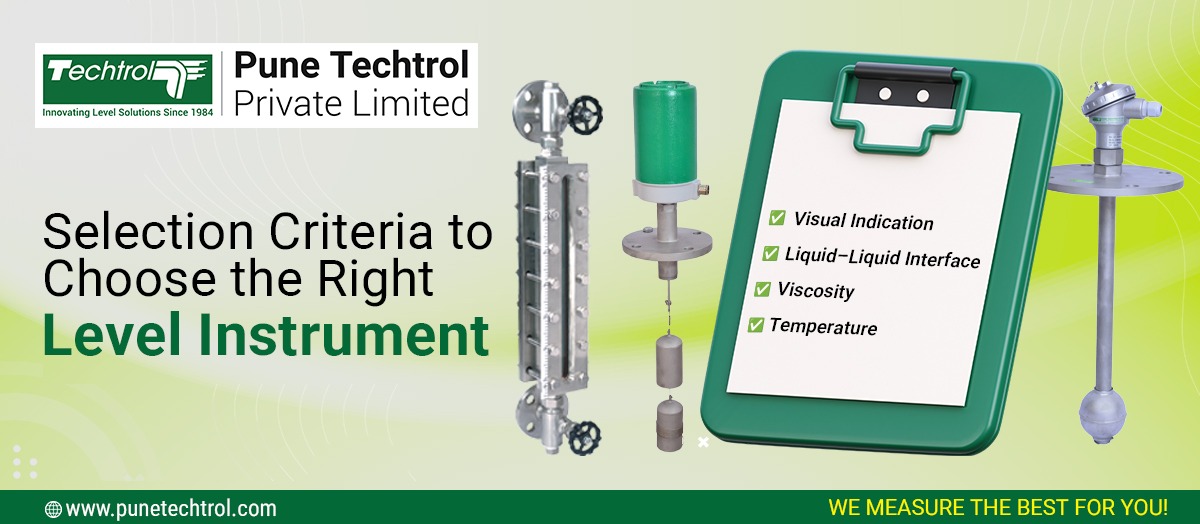
Selection Criteria to Choose the Right Level Instrument
Level measurement is a vital part of process automation in water treatment, food & beverage, oil & gas and chemicals. Selecting the right level instrument ensures accurate readings, efficient operations and safety.
All level measuring instruments are based on various physics principles such as Archimedes' principle (used in float and submerged body systems), as well as conductivity, capacitance, light refraction, and others. Its suitability for the process depends on various factors like characteristics of process media, process parameters like pressure, temperature and so on. These options can be narrowed down by considering following factors.
Key considerations for selecting the right level instrument
Here’s a structured guide to help you make an informed selection:
- Purpose of Measurement
|
SL |
Purpose |
Recommended Instrument |
|
a |
Visual Indication
To observe the level in the tank/ vessel locally from outside. |
Level Gauges for Liquids e.g., Glass type – Tubular, Reflex, Transparent, Multiport Bicolor Float type: Magnetic, Float & Dial, Float & Board, Float & Tape
|
|
b. |
Level Detection & Control To detect the liquid at critical levels such as overflow, high or low level so as to operate auxiliary instruments such as hooter/ annunciator, pump/ motor or solenoid valve. |
Level Switches or Liquids e.g., Float, Displacer, Conductivity, Capacitance, Vibrating, Air Diaphragm Level Switches for Solids e.g. Rotary Paddle, Vibrating Fork, RF Admittance, Microwave Switch
|
|
c. |
Continuous Level Measurement & Remote Monitoring To measure/ observe real time level of liquid in the tank and integration with control systems. Transmit its o/p signal over long distance for remote indication. Contact/Non-Contact Type
|
Level Transmitters for Liquids & Solids with or without Display Indicators Contact Type: Float, Displacer, Magnetostrictive Capacitance Hydrostatic, Guided Radar Non-Contact Type: Ultrasonic, Radar |
|
d. |
Remote Monitoring Industry 4.0 / LoRa Technologies Wireless system for real time monitoring from remote distance |
IIoT Gateways, LoRa gateways along with switches and transmitters |
|
e. |
Combination of Level Gauge, Switch & Transmitter Local indication with control and transmitting |
Level Gauge with Switches and Transmitter e.g. Magnetic, Float & Dial or Float &Tape Level Gauge with Switches & Transmitter |
- Type of Service Medium
|
Medium Type |
Instrument Type |
|
Liquid |
Liquid Level Gauges, Switch and Transmitters as mentioned in Pt .1 |
|
Liquid Slurry (Free Flowing) |
Float & Board, Float & Dial, Float & Tape Gauge Float Tilt, Displacer Switch |
|
Liquid–Liquid Interface |
Interface Level Instruments (Transparent Glass, Magnetic Level Gauge, Float / Displacer Switches & Transmitters) |
|
Solids (Powders, Granules) |
Solid Level Instruments (e.g., Rotary Paddle, Vibrating Fork, RF Admittance, Microwave Switches, Radar) |
- Liquid & Solid Properties Affecting Instrument Selection
|
Properties |
Selection |
|
Corrosive, Non-Corrosive, or Sour Service |
Choose wetted part material of instrument that should be resistant to the medium (e.g., SS316, PP, PTFE, PVDF, Hastalloy) |
|
Specific Gravity (SG) |
Essential for float and displacer based instruments like float gauges/ switches/transmitters or differential pressure transmitters. |
|
Dielectric Constant |
Required for capacitance and guided wave radar instruments to select appropriate probe design |
|
Conductivity |
Relevant for conductivity-type level switches. |
|
Viscosity |
Select instrument for proper functioning. All Techtrol instruments are suitable for free-flowing liquids & solids |
|
Foam & Fumes |
Presence of foam and fumes get poor reflection of signal in Ultrasonic Transmitter and affect the measurement & accuracy. |
|
Suspended Solids |
Heavy particles/sediments can restrict float movement |
|
Static Charge Creation in Process |
Require instruments with static charge protection. (RF admittance with static charge protection. ATEX non-electrical Magnetic Level Gauge. |
- Operating Conditions
|
Min & Max. Operating Temperature and Pressure |
Determines the material and design (e.g., glass type, sealing, pressure rating). It also determines specific gravity of liquid, hence float suitability. |
|
Presence of Agitator/Stirrer and Tank Internals if any |
Requires provision of Stillwell to isolate turbulence in liquid. To arrange external chamber to overcome constraint due to tank size and tank internals to help trouble free level measurement. |
- Signal Output Requirements
|
Output Type |
Suitable For |
|
Potential-Free Contact, PNP / NPN, Namur |
Level Switches (On/Off control, alarms) |
|
4–20 mA, 4-20 mA + HART RS-485, Foundation Fieldbus |
Level Transmitters (for continuous level monitoring and integration with control systems) |
- Environmental Conditions and Safety
|
Condition |
Recommendation |
|
Hazardous Area (Zone 0/1/2) |
Use of Flameproof (Ex d) enclosures Intrinsically Safe (Ex ia) instruments with Zener Barrier Instruments with Namur Output |
|
Corrosive / Humid Atmosphere |
Use corrosion-resistant materials and hermetically sealed switches and enclosures |
|
Dusty Environments |
Use IP66 water & dust proof terminal enclosures Use radar transmitters with air purging features to prevent buildup on sensor surface |
|
Ambient Temperature General indoor and outdoor temperature. |
Use of appropriate MOC, Enclosure IP Rating, Hermetic Sealing, Jacketing, Electric Heat Tracing and Frost Free |
- Tank Shape, Size and Instrument Mounting
|
Tank Details |
Determine |
|
Tank Size, Shape, Nozzle Size and Length. Underground, ground level or Overhead Tanks |
Decides measurement range and helps in volume calculations. Accordingly select instrument type. |
|
Mounting Location and Type (Top, side, or bottom mounting and process connection) |
Helps in selecting suitable instrument type.
|
- Resolution & Accuracy: Choose sensors based on required precision/accuracy
- Cost & Budget: Selection of economical or high-end instruments based on available budget and criticality of the application.
Conclusion
There is no universal level measurement technology suitable for all applications. Each process has unique requirements, and selecting the correct level instrument depends on process conditions, fluid properties, and installation constraints. Close interaction with the end-user ensures that the chosen sensor meets both technical and operational needs, resulting in accurate, reliable, and cost-effective performance.
Pune Techtrol offers a comprehensive range of level measurement instruments to suit various industrial applications.
For assistance in selecting the most suitable solution for your process needs, please feel free to reach out to us at: mktg@punetechtrol.com or visit our website: www.punetechtrol.com
-
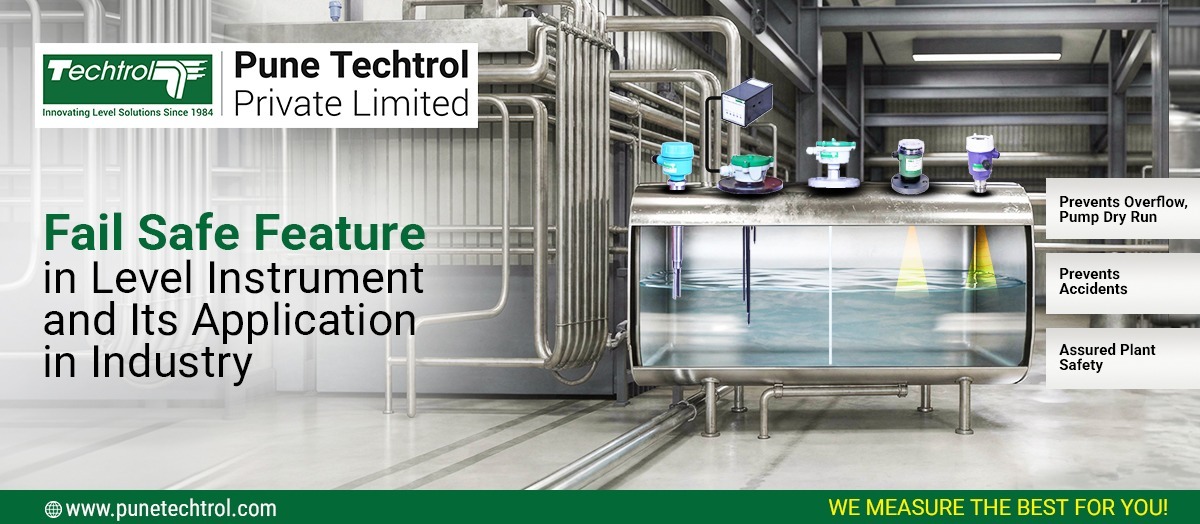
Fail Safe in Level Instruments: What It Is and Why It Matters
-
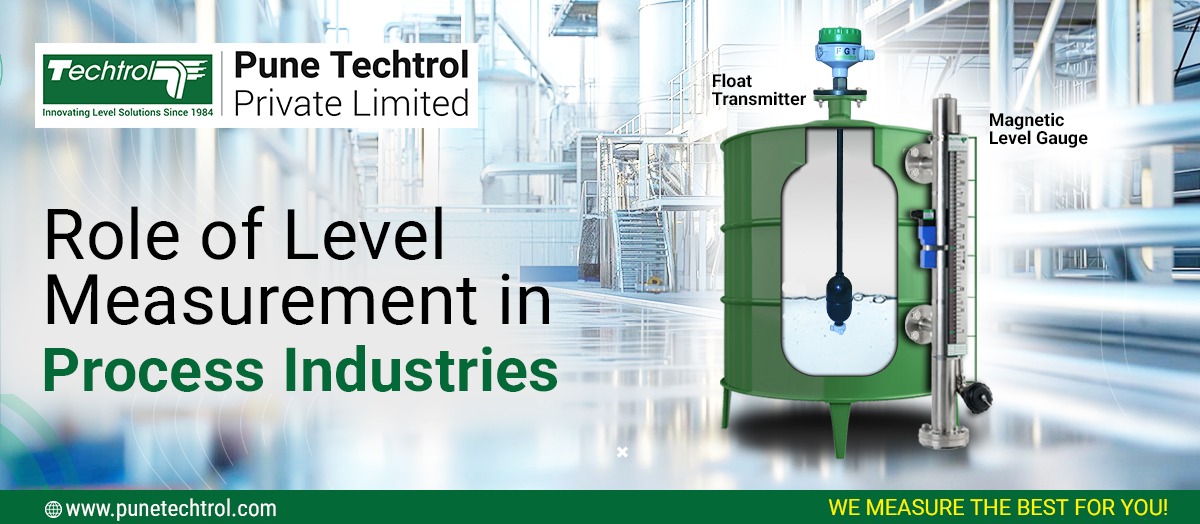
Role of Level Measurement in Process Industries
-
Selection Criteria to Choose the Right Level Instrument
-
Products