Liquid-Liquid Interface Level Measurement using Float Type Level Sensors
In industries like oil & gas and chemical processing, applications often involve interface liquids such as oil and water in separator vessels. In these cases, accurate measurement of the interface level is crucial for process control, separation efficiency, and preventing contamination of oil mixed with water.
What is Liquid – Liquid Interface?
Liquid–liquid interface is a layer formed between two immiscible liquids of different densities when they are mixed together in a container or tank. Lighter liquid (low density) naturally rises to the top and heavier (high density) liquid settles at bottom, creating a distinct separation between the two liquids. A common example is mixture of oil and water, where oil floats on water surface. Refer figure 1.
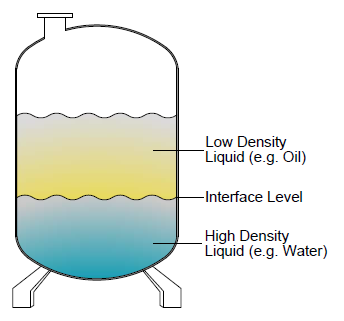
Figure 1
Float Design for Interface
In float type level sensors, float is specially designed to submerge in the lighter liquid, while floating on the heavier liquid, as illustrated in the adjacent image.
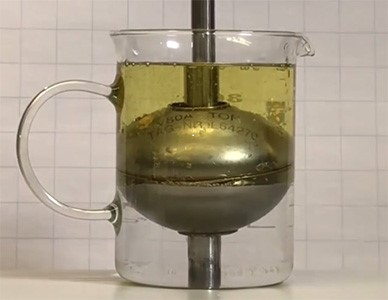
This single float can be used in reed type, float guided level transmitter for continuous measurement of interface level, providing 4-20 mA output. (fig. 2)

Figure 2
Advantages
In industry, various types of level measurement technologies are used for interface level measurement and monitoring. Float based technology has following advantages.
- Cost effective and reliable level measurement
- No restriction of nozzle length as required in guided radar.
- Short dead-band as compared to guided radar
- Not dependable on dielectric constant of liquid
In float based technology, Pune Techtrol have both level switches & transmitters available for interface level measurement. It requires density difference of minimum 0.2 between upper and lower liquid. Similarly, Magnetostrictive Level Transmitter is also provided for more accurate level measurement of interface level.
Limitations
- Not suitable for applications where density varies during operation
- Difference between specific gravity of two liquids should be ≥0.2
- Suitable for free flowing liquids only
- Not suitable for applications where emulsion is formed
Other than level switches and transmitters, level gauges’ like Transparent Flat Glass Gauge, Float based Magnetic Level Gauges are also used for visual indication of interface liquid levels.
Conclusion
Float type level sensors is the most reliable solutions for measuring liquid-liquid interfaces, particularly in applications with stable operating conditions. Whether you're separating crude oil and water, or managing chemicals in a reactor, float sensors can provide an elegant solution to a complex measurement need.

-
Fail Safe in Level Instruments: What It Is and Why It Matters
-
Role of Level Measurement in Process Industries
-
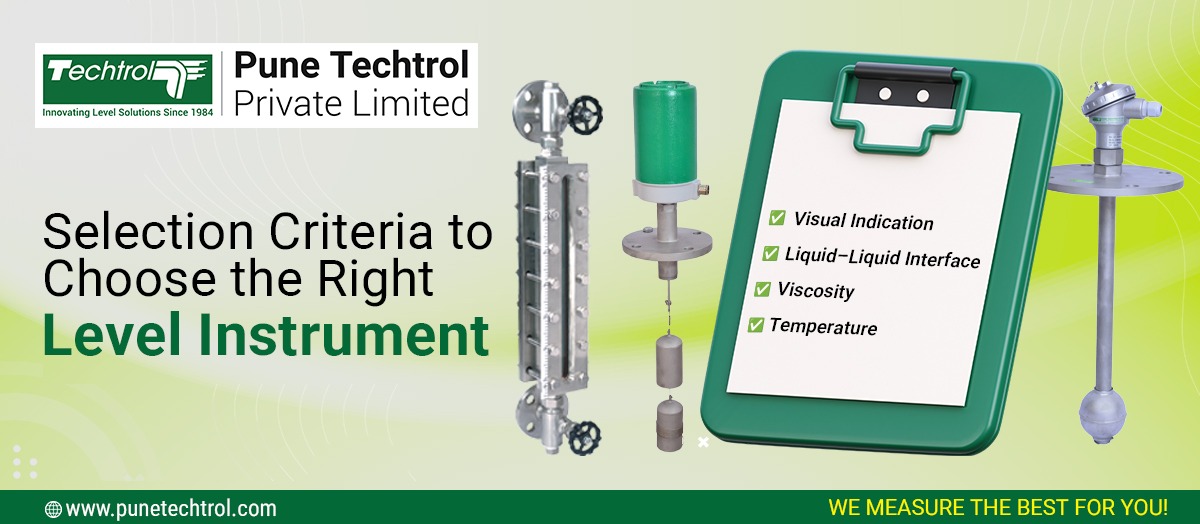
Selection Criteria to Choose the Right Level Instrument
-
Products